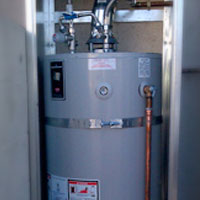
A water heater making noise rarely gets better on its own. That banging or hissing coming from your water heater closet is not something to ignore — and if you’ve been Googling water heater repair Torrance CA at midnight, you’re not alone. Strange noises are usually your first warning that something is wrong inside the tank, and catching the problem early can be the difference between a simple fix and a full replacement. Each sound has a cause, and once you know what you’re hearing, you can act fast. This guide breaks down the most common water heater noises, what they mean, and exactly what to do next.
V-Max Plumbing has served the South Bay and Long Beach area for over 15 years. Our team is licensed, insured, and local — and we never charge weekend or after-hours surcharges.
Popping and Rumbling Usually Mean Sediment Buildup
If your water heater sounds like a bag of microwave popcorn, sediment is almost certainly the culprit. Minerals like calcium and magnesium naturally settle at the bottom of your tank over time, especially in areas with hard water — and Southern California water is notoriously hard.
The U.S. Department of Energy notes that sediment buildup is a leading cause of tank failure and the popping or rumbling sound that homeowners commonly hear.
When the heating element fires up, it forces water to push through that layer of sediment. That pressure creates the popping, cracking, or rumbling sounds you hear. The tank has to work harder to heat water through all that buildup, which drives up your energy bill and shortens the unit’s lifespan.
The fix? A full tank flush. Here’s what that involves:
- Turn off the power or gas to the unit before you start
- Connect a garden hose to the drain valve at the bottom of the tank
- Open the drain valve and let the water run until it flows clear
- Close the valve, refill the tank, and restore power or gas
If you haven’t flushed your tank in over a year, expect the water to run brown or gritty before it clears. If flushing doesn’t stop the noise within a day or two, the sediment may have hardened into scale — at that point, you’re likely looking at a professional inspection or a replacement conversation.
Hissing and Sizzling Point to a Leak You Need to Find Now
A hissing or sizzling sound is more urgent than a rumble. It usually means water is dripping onto a hot surface somewhere — most often around the heating element, the pressure relief valve, or a loose connection at the tank’s fittings.
Run your hand carefully around the base of the tank, the valves, and the supply lines. Look for moisture, rust stains, or white mineral deposits — all of these are signs of a slow leak. Even a small drip near an electrical component is a safety risk.
A faulty temperature and pressure (T&P) relief valve is a common source. This valve is designed to open if pressure inside the tank gets dangerously high — so if it’s leaking or hissing on its own, that’s a sign it’s either failing or actually doing its job because pressure is too high. Either way, that’s not a DIY situation.
If you spot active water damage or can’t locate the source, shut off the cold water supply to the unit and call a plumber. Homeowners dealing with a water heater not working in Torrance often trace the original problem back to a hissing sound they ignored for weeks.
Banging and Knocking? Check Your Pipes, Not Just the Tank
Loud banging — sometimes called water hammer — often isn’t coming from the tank itself but from the pipes connected to it. When hot water shuts off suddenly, the momentum of the water moving through your pipes has nowhere to go and slams into a closed valve. That thud echoes through the walls and sounds like it’s coming from the heater.
You can tell the difference between pipe noise and tank noise by timing the sound. If the bang happens right when you turn off a tap or the dishwasher finishes a cycle, you’re dealing with water hammer. If it happens while the tank is heating — independent of any faucet use — the problem is inside the tank.
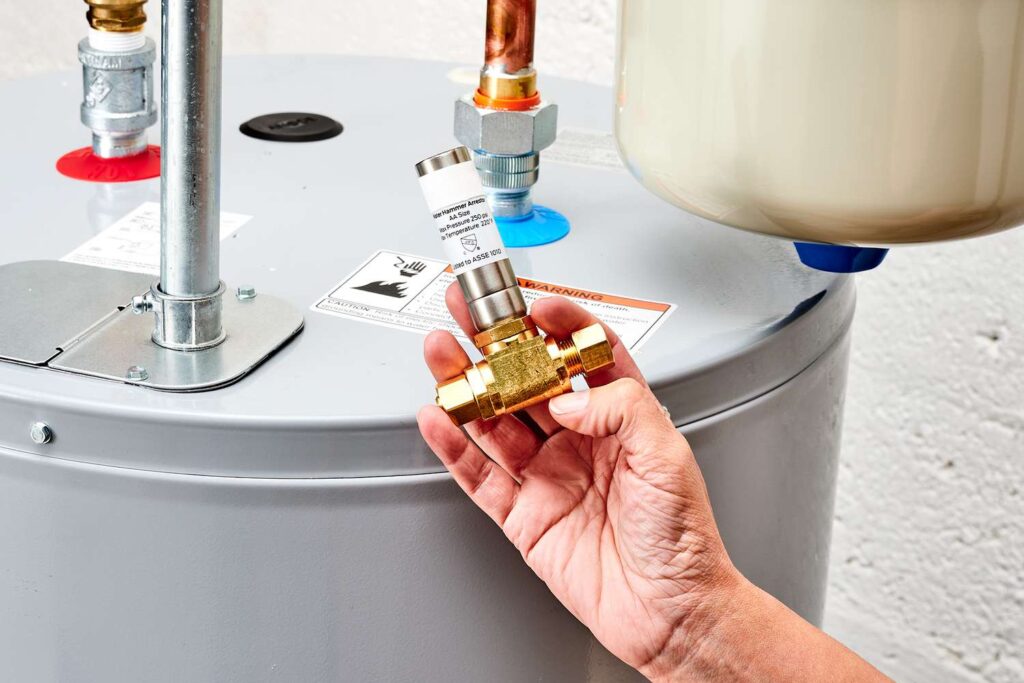
For water hammer, a plumber can install a water hammer arrestor — a small device that absorbs the pressure spike — usually for under $100 in parts. For internal banging during heating cycles, the issue is more likely severe sediment buildup or, in older tanks, a deteriorating dip tube that’s sending cold water where it doesn’t belong.
Either way, persistent banging deserves a professional look. A quick diagnostic visit costs far less than repairing water damage from a tank that eventually fails under stress.
Ticking and Screeching Tell You the Inlet Valve Needs Attention
A high-pitched screeching or whining sound almost always points to a water flow restriction — usually at the inlet control valve. If that valve isn’t fully open, water squeezes through a narrower opening under pressure, creating that screech. The fix is often as simple as fully opening the valve.
Check the cold water shut-off valve above the unit. If it’s only partially open, open it completely and listen. In most cases, the screeching stops within a minute.
Ticking sounds are different. They’re often caused by normal thermal expansion — the pipes expanding and contracting as water temperature changes. This is harmless in most cases, but if the ticking is loud, constant, or new, it’s worth having someone check whether your expansion tank (if you have one) is still functioning correctly.
Homeowners exploring a tankless water heater in Southern California sometimes make the switch specifically to eliminate these kinds of noises. Tankless units heat water on demand without storing it, so sediment buildup and pressure fluctuations inside a storage tank are no longer a concern. That said, tankless units have their own maintenance needs — including annual descaling — so they’re not entirely hands-off.
When a Noise Means Your Water Heater Is Done — Not Just Struggling
Some sounds are repair signals. Others are replacement signals. Knowing which is which saves you money and stress.
Here are the signs that a noise is telling you the unit has reached end of life:
- The tank is over 10 to 12 years old and making multiple new sounds at once
- You’ve flushed the tank and the noise came back within a few weeks
- You see visible corrosion on the tank body or around the fittings alongside the noise
- Hot water runs out faster than it used to, even with normal household use
- Repair quotes are coming in at more than 50% of the cost of a new unit
If you’re in the Seal Beach or South Bay area, water heater replacement in Seal Beach and surrounding communities typically runs between $900 and $2,500 installed, depending on tank size, fuel type, and whether you’re switching to a different system. A standard 50-gallon gas tank replacement sits closer to the $1,000 to $1,400 range with labor.
Don’t let a failing unit limp along. A tank that’s struggling under sediment, pressure issues, or corrosion is more likely to spring a serious leak — and water damage in a home can cost $3,000 to $10,000 or more to remediate.
How to Slow Down Future Water Heater Problems Before They Start
Maintenance isn’t glamorous, but it’s the single most effective thing you can do to avoid emergency calls and premature replacements. These habits make a real difference:
- Flush the tank annually — or every six months if you have particularly hard water in your area
- Test the T&P relief valve once a year by lifting the test lever briefly; water should flow out and stop cleanly when released
- Inspect the anode rod every three years — this sacrificial metal rod prevents tank corrosion; replacing it costs $20 to $50 and can double the life of your tank
- Set the thermostat to 120°F — higher temperatures accelerate sediment buildup and put unnecessary pressure on the tank
- Install a whole-house water softener if your water hardness is above 7 grains per gallon — this dramatically slows mineral accumulation
If you’re not sure when your unit was last serviced or whether it’s due for an anode rod check, a basic water heater tune-up from a local plumber in Torrance or the surrounding area usually runs $75 to $150 and can extend the life of the unit by several years. That’s money well spent compared to an emergency weekend replacement call.
Frequently Asked Questions
Is it safe to use my water heater when it’s making noise?
It depends on the sound. Mild popping or ticking is usually safe short-term but signals a maintenance issue. Hissing near valves, loud banging, or any sound paired with a visible leak means you should shut the unit off and call a plumber right away.
How much does water heater repair in Torrance CA typically cost?
Minor repairs like replacing a heating element or thermostat usually run $150 to $300 including labor. More involved repairs — like fixing a pressure valve or replacing a dip tube — can reach $300 to $500. If repair costs push past half the price of a new unit, replacement is the smarter move.
Why does my water heater make noise only at night?
Most water heaters run a heating cycle when hot water demand drops — often in the early morning hours or late at night. If sediment is sitting at the bottom of the tank, you’ll hear it more clearly during these quiet periods. The house is also quieter, so sounds you’d miss during the day become obvious.
Can I flush my water heater myself, or do I need a plumber?
Most homeowners can flush a standard tank water heater themselves if the drain valve is in good condition and accessible. If the valve is old, plastic, or shows signs of corrosion, don’t force it — a plumber should handle it to avoid a valve failure that turns a simple flush into an emergency.
How do I know if my water heater is not working or just noisy?
If you’re getting hot water normally, the unit is working — the noise is a maintenance or wear issue. If the water runs cold or lukewarm, runs out much faster than usual, or you notice leaking alongside the noise, the unit has a functional problem that needs a professional diagnosis.
Is a tankless water heater worth it for Southern California homes?
For many Southern California homeowners, yes. Tankless units are 24 to 34 percent more energy efficient than standard tanks for homes that use under 41 gallons per day, and they eliminate the sediment and pressure problems that come with storage tanks. The upfront cost is higher — typically $1,500 to $3,000 installed — but long-term savings and lifespan (20+ years vs. 10 to 12) often justify it.
What’s the average lifespan of a water heater in the Torrance area?
A standard tank water heater lasts 8 to 12 years in Southern California, though hard water can shorten that if the tank isn’t flushed regularly. Tankless units last 15 to 20 years with proper maintenance. If your unit is over 10 years old and starting to make new sounds, start budgeting for a replacement.
Need a Plumber in Southern California?
V-Max Plumbing serves the South Bay and Long Beach area from our Torrance office. We show up on time, fix the problem, and stand behind the work. Call (310) 614-3579 or request a free quote online — we’re available 7 days a week with no after-hours surcharges.