If your drain is slow and you are reaching for a bottle of chemical drain cleaner, hold off for a minute. Drain cleaning in Torrance CA is not as simple as pouring a liquid and waiting, especially if your home was built before 1980. Those caustic chemicals that eat through clogs will eat through old pipes too. Here is what a plumber actually sees after years of cleaning up the problems those bottles leave behind.
What Chemical Drain Cleaners Actually Do Inside Your Pipes
Chemical drain cleaners work by triggering an intense exothermic reaction inside your pipe, meaning they generate serious heat to break down whatever is clogging the drain. Sodium hydroxide, also known as lye, and sulfuric acid are the two main active ingredients. They are effective at dissolving hair and grease, but they do not know when to stop.
The heat alone can warp PVC fittings and soften rubber seals. In older homes, you are often dealing with pipes that are already under stress from decades of use, minor corrosion, or small cracks. Adding a chemical reaction that spikes temperatures inside those pipes is like pressing on a bruise.
Here is what the label will not tell you. If the cleaner does not fully clear the clog, it just sits there, pooling in your pipe and continuing to react with the pipe wall itself. That is when real damage starts.
Sodium hydroxide generates heat up to 250 degrees Fahrenheit, which softens PVC and degrades older plastic fittings. Sulfuric acid corrodes metal pipes rapidly, especially at joints and elbows. And every application compounds existing damage, gradually thinning pipe walls over time.
One bottle used occasionally might not ruin your plumbing. But most people reach for it every few months, and that is where the real damage accumulates.
Why Galvanized Pipes Are Especially Vulnerable to Chemical Damage
Galvanized steel pipes were the standard in homes built from the 1940s through the 1970s. They were coated with a layer of zinc to resist corrosion, but that zinc coating does not last forever. According to the EPA, galvanized pipes typically begin to degrade significantly after 40 to 50 years of use, leaving raw steel exposed on the inside of the pipe.
When chemical drain cleaners contact corroded galvanized steel, they accelerate the rusting process dramatically. The interior of the pipe is often already roughened and pitted from decades of mineral buildup, which gives the chemical more surface area to react with. Using drain cleaner on a galvanized pipe is essentially speeding up its failure by years.
Galvanized pipe replacement in Southern California is one of the most common jobs plumbers take on. A surprising number of those calls start with a homeowner who used chemical cleaners for years before a pipe finally gave out.
Galvanized pipes corrode from the inside out, so the damage is invisible until a leak suddenly appears. Chemical cleaners strip away whatever protective zinc remains on the pipe interior. And when pinhole leaks develop inside walls with no visible warning, the result is mold growth and structural damage that costs far more to fix than a drain cleaning service call ever would have.
If your home still has galvanized plumbing, treat chemical drain cleaners as a hard no.
How to Actually Clear a Clogged Drain Without Damaging Your Pipes
Most residential clogs respond well to methods that will not eat through your pipes. Whether you are dealing with a clogged drain in Bellflower CA or anywhere else in the South Bay, the same safer approaches apply.
Start with a hand drain snake. A basic 25-foot hand auger from any hardware store costs around $30 and will clear the majority of bathroom hair clogs and kitchen grease blockages. You are physically breaking up or pulling out the obstruction with no chemistry involved.
Boiling water is effective on grease clogs in metal pipes, though you should skip it on PVC since it can soften joints over time. A baking soda and white vinegar combination creates a gentle fizzing action that loosens minor buildup without any corrosive heat. For hair, food debris, and soft blockages within the first ten feet of pipe, a hand snake will almost always do the job.
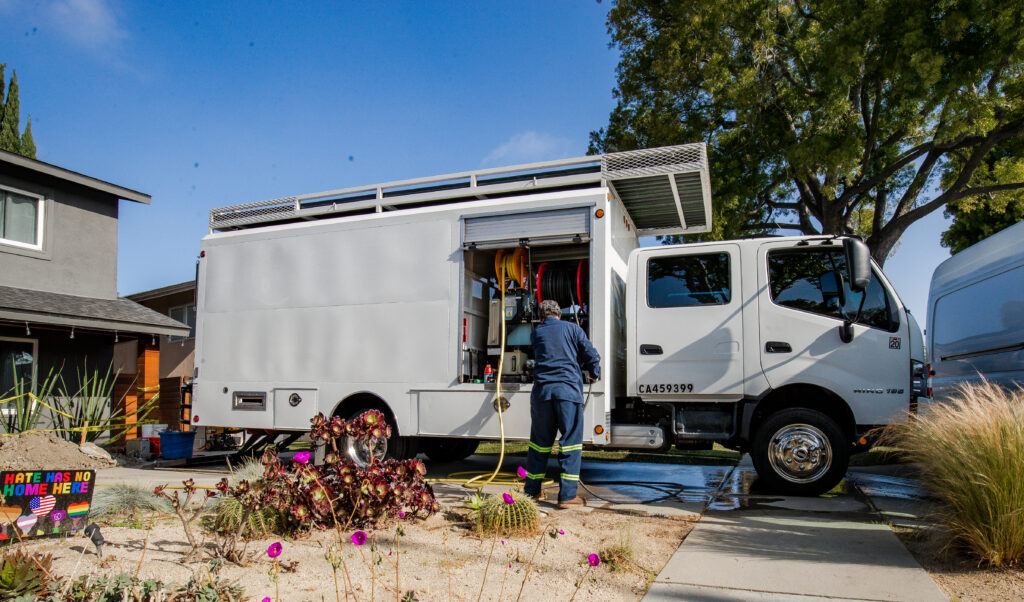
For stubborn clogs or anything deeper in the line, professional hydro jetting is the most thorough and pipe-safe option available. It uses high-pressure water at 3,000 to 4,000 PSI to scour the entire interior of the pipe clean, removing grease, scale, and minor root intrusion without any chemicals at all. Unlike drain cleaners that just punch a temporary hole through a clog, hydro jetting clears the full pipe wall and the results last.
For anything beyond what a hand snake can reach, calling a plumber is the smarter move. A camera inspection costs less than the drywall repair you will need after a chemically damaged pipe fails inside a wall.
Four Warning Signs Your Old Pipes Cannot Handle Any More Chemical Stress
Not every homeowner knows exactly what is running behind their walls. But there are signals that your plumbing is already under enough strain that adding chemical cleaners could push things into emergency territory.
Slow drains throughout the house, not just at one fixture, point to a mainline issue or widespread internal buildup. These are problems that chemical cleaners will not fix and will only make worse over time.
Discolored water or a metallic taste coming from your taps means your galvanized pipes are corroding internally. Using chemical cleaners in this scenario accelerates pipe degradation fast.
A recurring clog in the same drain every four to six weeks despite treatment is a sign of a structural issue, whether that is a partial collapse, root intrusion, or severe scaling inside the pipe. No bottle of drain cleaner will solve that.
Gurgling sounds from multiple drains signal a venting or mainline problem. Pouring chemicals down one drain when there is a systemic issue risks chemical backup into other fixtures throughout the house.
Any one of these signs is a reason to call a plumber rather than open a bottle. Drain cleaning in Seal Beach CA and older coastal communities comes with extra pipe-age concerns too. Salt air accelerates exterior corrosion on pipes, which compounds whatever internal chemical damage has already occurred. When you are seeing multiple warning signs at once, assume your pipes need professional attention within weeks, not months.
What Professional Drain Cleaning Actually Includes and Why It Is Worth It
A lot of homeowners assume professional drain cleaning is just someone doing what they would do at home, only with bigger tools. The reality is quite different, and the difference matters a lot for older homes.
A licensed plumber starts with a camera inspection to see exactly what is happening inside the pipe. That changes everything. Instead of guessing and applying a generic solution, you know whether you are dealing with a grease buildup, a root intrusion, a collapsed section, or a corroded joint. That diagnosis determines the right fix, not just the right tool.
From there, the approach depends on what the camera finds. A motorized drain auger goes deeper and hits harder than a hand snake and is ideal for tougher blockages up to 100 feet into the line. Hydro jetting at 3,000 to 4,000 PSI scours the entire pipe wall clean without chemicals and handles grease, scale, and minor root intrusion effectively. For sections that show damage on camera, spot repair or pipe lining can often seal or patch the problem without a full replacement.
Professional drain cleaning in Torrance CA typically runs between $150 and $400 depending on access and the method needed. Compare that to a burst pipe repair that can easily reach $2,000 to $5,000 once you factor in drywall, flooring, and mold remediation.
The bottle of chemical cleaner costs $10. Knowing your pipes are actually clear and intact is worth far more than that.
V-Max Plumbing serves Torrance, Seal Beach, and Bellflower with camera inspections, hydro jetting, and professional drain cleaning available seven days a week. If your drains keep slowing down or you have an older home with galvanized pipes, contact us today before a small clog becomes a major repair. Call our Torrance office at (310) 614-3579 or our Seal Beach office at (562) 850-3337.
Frequently Asked Questions
Is it ever safe to use chemical drain cleaners on old pipes?
Rarely. If your home has galvanized steel, cast iron, or older PVC pipes, the heat and corrosive reaction from chemical drain cleaners can accelerate existing damage significantly. Safer options like a drain snake or professional hydro jetting are just as effective without the risk.
How do I know if my home still has galvanized pipes?
Scratch a small area of an exposed pipe with a coin. Galvanized steel will show a silver-grey metal underneath, not copper. Homes built before 1980 in Southern California frequently still have galvanized plumbing, particularly on supply lines. A plumber can confirm this quickly with a visual inspection.
What is the safest DIY method for a clogged drain in an older home?
Start with a hand drain snake. It is mechanical rather than chemical and will not harm your pipes. For grease-based clogs in metal pipes, pouring a kettle of boiling water down the drain first can help loosen buildup. Avoid boiling water in PVC systems since it can soften joints over time.
How often should I get professional drain cleaning done?
For older homes with a history of slow drains or galvanized pipes, once every 12 to 18 months is a reasonable schedule. Homes with large trees in the yard, which is common in areas like Bellflower and Seal Beach, may benefit from annual mainline cleaning to stay ahead of root intrusion.
Can chemical drain cleaners damage a septic system?
Yes. Chemical drain cleaners kill the beneficial bacteria inside a septic tank that break down waste. Without those bacteria, solid waste accumulates faster and leads to more frequent pump-outs and potential system failure. Enzyme-based drain treatments are a much safer alternative for homes on septic systems.
What does hydro jetting cost compared to chemical drain cleaning?
Hydro jetting typically runs $250 to $500 for a standard residential drain line, compared to a few dollars for a store-bought chemical cleaner. But hydro jetting fully clears the pipe and the results last for months. Chemical cleaners usually only punch a temporary hole through a clog and leave buildup coating the pipe walls.
When should I stop trying DIY fixes and just call a plumber?
Call a plumber if the same drain clogs more than twice in two months, if multiple drains are slow at the same time, or if you hear gurgling from drains you have not recently used. These patterns point to mainline or structural problems that no DIY method can permanently resolve.