Nothing derails a morning like turning on the shower and getting hit with ice-cold water — and if your water heater not working in Torrance has you scrambling, you’re not alone. Between aging tank units, tripped breakers, and pilot lights that won’t stay lit, the list of culprits is longer than most people expect. The good news is that many of these problems have clear warning signs, and knowing what to look for can save you hours of guesswork. This guide walks you through the most common causes by heater type so you can troubleshoot smart, not just wait and hope.
V-Max Plumbing has served Torrance and the South Bay for over 15 years. Our team is licensed, insured, and local — and we never charge weekend or after-hours surcharges.
Check These Four Things Before You Call Anyone
Before you assume the worst, run through this quick checklist. You’d be surprised how often the fix costs nothing.
The U.S. Department of Energy notes that water heating is typically the second largest energy expense in a home, accounting for about 18% of your utility bill.
- Circuit breaker: Electric water heaters trip breakers more often than people realize. Go to your electrical panel and look for any breaker in the middle position or fully flipped. Reset it, wait 30 minutes, and check for hot water.
- Pilot light (gas units): If your gas water heater has a standing pilot, check whether it’s lit. The relight instructions are usually printed right on the unit. If it won’t stay lit after three attempts, you likely have a faulty thermocouple — a $15 part that most plumbers replace in under an hour.
- Thermostat setting: Someone may have bumped the dial. The sweet spot for most households is between 120°F and 125°F. Below 110°F and you’ll feel the difference fast.
- Shut-off valve: Check that the cold water supply valve feeding the heater is fully open. A partially closed valve dramatically reduces output, especially during peak morning demand.
If everything above checks out and you still have no hot water, the problem runs deeper. Keep reading — the next sections break it down by heater type.
Tank Water Heaters: Why They Fail and What the Symptoms Mean
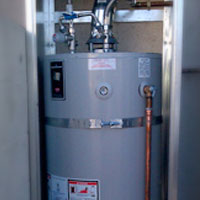
Traditional tank water heaters are the most common setup in Torrance homes, and they tend to show clear warning signs before they quit entirely.
Sediment buildup is the most overlooked killer. Southern California water is notoriously hard — heavy with calcium and magnesium that settles at the bottom of your tank over time. You’ll hear it as a rumbling or popping sound when the heater fires up. That layer of sediment insulates the water from the burner, forcing the unit to work harder and heat less efficiently. Flushing the tank once a year prevents this, but if you’ve never done it, years of buildup may mean the tank is too far gone to save.
A failing heating element (on electric units) produces a specific pattern: you get some hot water, but it runs out faster than it used to and takes longer to recover. If the bottom element fails, you lose most of your capacity. If the top element goes, you may get no hot water at all.
A leaking tank is almost always a replacement job, not a repair. Once the internal lining corrodes and water starts pooling around the base, no patch will hold long-term. Most tank water heaters last 8 to 12 years. If yours is pushing that range and showing any of these symptoms, water heater repair in Torrance CA may only buy you months, not years.
Tankless Water Heaters: What Goes Wrong and When to Suspect It
Tankless units heat water on demand, which makes them extremely efficient — but their error codes and failure points are different from tank models, and misdiagnosing them is common.
Error codes on the display are your first clue. Most modern tankless heaters show a numbered or lettered code when something trips. Write it down and search it with your unit’s brand and model number — this alone can tell you whether you’re dealing with a flow sensor, ignition failure, or venting blockage.
Minimum flow rate issues catch a lot of people off guard. Tankless units need a minimum water flow — usually around 0.5 to 0.75 gallons per minute — to activate the burner. A partially closed valve, a clogged inlet filter, or low water pressure from the street can all drop flow below that threshold. The result: the tap runs, but no heat kicks in.
Scale buildup inside the heat exchanger is the tankless equivalent of sediment in a tank. Hard water in the Torrance area accelerates this. Annual descaling with a vinegar flush keeps the heat exchanger efficient. Neglect it for three or four years and you risk permanent damage to the exchanger — the most expensive part of the unit.
If your tankless unit is over 10 years old and throwing repeated error codes despite cleaning, it may be time to look at tankless water heater installation in Torrance rather than cycling through repairs.
Gas vs. Electric: How the Fuel Type Changes Your Troubleshooting
The steps you take depend heavily on whether your system runs on gas or electricity. Mixing up the approach wastes time and can be dangerous.
Gas water heaters depend on a functioning gas supply, a working thermocouple or thermopile, and proper venting. If your other gas appliances — stove, furnace — are working fine, the supply line isn’t the issue. Focus on the ignition components. A thermocouple that fails to sense the pilot flame will shut off the gas valve as a safety measure, which is exactly why your pilot won’t stay lit. That said, if you smell gas at any point, leave the house immediately and call your gas company before anyone else.
Electric water heaters have two heating elements — upper and lower — each with its own thermostat. Testing them requires a multimeter and some comfort around electrical components. If that’s not you, this is a reasonable place to hand off to a licensed plumber or electrician. Replacing a single element typically runs $150 to $300 including labor, which is far cheaper than a full unit replacement.
One key difference worth knowing: gas units recover faster. A 50-gallon gas tank can reheat fully in 30 to 40 minutes. An electric equivalent often takes 60 to 80 minutes. If your household has grown or your usage patterns have changed, that recovery gap might explain why you’re running cold — even when nothing is technically broken.
When Repair Stops Making Sense and Replacement Wins
There’s a rough rule of thumb in the plumbing world: if the repair costs more than 50% of a new unit, replace it. That math shifts depending on the age of your heater, but it holds up well for most situations.
Here are the clearest signs that replacement beats repair:
- The unit is more than 10 years old and has already needed one major repair in the past two years.
- You’re seeing rust-colored water — that means the tank interior has corroded, and no repair changes that.
- You’re in repeated repair cycles — thermocouples, elements, and valves failing one after another.
Energy bills have climbed without a change in usage, which often signals that the unit is working twice as hard to deliver the same output.
If you’re replacing a tank unit anyway, this is a smart moment to consider a tankless water heater in Southern California instead. Tankless systems last 15 to 20 years, cut standby energy loss entirely, and deliver hot water without the wait — a genuine upgrade for families that have outgrown a single tank. The upfront cost runs higher, but most households see the difference in energy savings within five to seven years.
How to Choose the Right Torrance Plumber for Water Heater Work
Not every plumber has hands-on experience with both tank and tankless systems, and the difference shows in diagnostic speed and repair quality. Here’s what to look for.
- Ask specifically about tankless experience if that’s your unit type. Tankless systems have different pressure requirements, venting specs, and descaling procedures. A plumber who mainly works on tanks may misread error codes or overlook scale buildup entirely.
- Check licensing and insurance — in California, water heater installation requires a licensed contractor. This matters most for gas lines and any work requiring a permit.
- Get a written estimate before work starts. Reputable companies offer upfront pricing. If someone won’t quote you in writing, move on.
- Ask about warranty on parts and labor. Good shops back their work with at least a one-year labor warranty and pass through manufacturer warranties on parts.
For water heater repair in Torrance CA, same-day service is often available for urgent situations — no hot water with kids in the house qualifies. Don’t wait a week for an appointment if a company near you can respond faster. Local knowledge also matters here: technicians familiar with Torrance water quality will account for hard water when making repair or replacement recommendations, which leads to better long-term outcomes.
Frequently Asked Questions
Why is my water heater not working but the pilot light is on?
A lit pilot light doesn’t guarantee heat. The thermocouple may be weak, the main burner orifice could be clogged, or the gas valve itself may be failing. If the pilot stays lit but the main burner won’t engage, call a plumber — this usually isn’t a DIY fix.
How long does a water heater repair take in Torrance?
Most standard repairs — thermocouple replacement, element swap, thermostat replacement — take one to two hours on-site. If parts need to be ordered, add one to three days. Full tankless descaling typically runs two to three hours.
Is a tankless water heater worth it in Southern California?
For most households, yes. Tankless water heaters in Southern California eliminate standby heat loss, last significantly longer than tank units, and handle high demand without running dry. The higher upfront cost — typically $1,500 to $3,500 installed — usually pays back through energy savings within five to seven years.
What causes a water heater to stop producing hot water suddenly?
Sudden loss of hot water usually points to a tripped breaker, failed heating element, extinguished pilot light, or a tripped high-temperature cutoff switch. Start with the breaker and pilot before assuming anything more serious.
How much does tankless water heater installation cost in Torrance?
Tankless water heater installation in Torrance typically ranges from $1,200 to $3,500 depending on the unit, whether gas line upgrades are needed, and venting requirements. Gas units generally cost more to install than electric but deliver faster recovery and lower operating costs long-term.
Can I repair a leaking water heater tank or does it need replacing?
A leaking tank almost always needs replacing. Once the internal lining corrodes enough to let water through, patching it is a temporary fix at best. Budget for a replacement and use the opportunity to upgrade if your current unit is more than eight years old.
How often should I flush my water heater in Torrance?
Once a year is the standard recommendation, and it matters more in Torrance and surrounding areas because of the hard water. Annual flushing removes sediment before it hardens into a layer that reduces efficiency and accelerates tank wear.
Need a Plumber in Torrance?
V-Max Plumbing serves Torrance and the South Bay from our Torrance office. We show up on time, fix the problem, and stand behind the work. Call (310) 614-3579 or request a free quote online — we’re available 7 days a week with no after-hours surcharges.