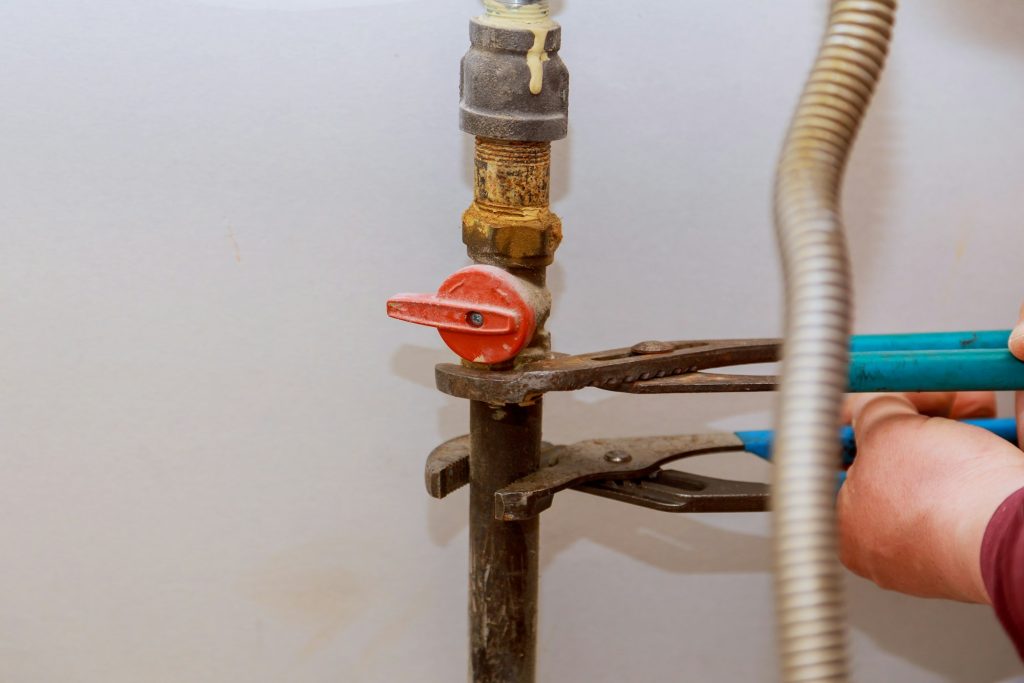
If you live in Seal Beach or anywhere along the Southern California coast, an earthquake shutoff valve isn’t just a nice-to-have — it could be the one thing standing between a minor tremor and a house fire. Gas leaks after earthquakes are one of the leading causes of post-disaster fires, and the LA Basin sits on enough active fault lines to make that a real concern, not a hypothetical one. Yet most homeowners have no idea whether their home already has one of these devices installed, let alone whether local code requires it. Here’s what you actually need to know.
V-Max Plumbing has served Seal Beach, Long Beach, and the Orange County coast for over 15 years. Our team is licensed, insured, and local — and we never charge weekend or after-hours surcharges.
The Southern California Earthquake Center’s Seven Steps to Earthquake Safety lists automatic gas shutoffs among the most important mitigation steps for California homeowners.
What an Earthquake Shutoff Valve Does (and Why It Matters Here)
An earthquake shutoff valve — sometimes called a seismic gas shutoff valve — automatically cuts off your home’s gas supply when it detects ground shaking above a certain threshold, typically 0.15g to 0.20g of acceleration. No one has to be home. No one has to think fast under pressure. The valve just closes.
Southern California experiences hundreds of small earthquakes every year, and the region sits near the Newport-Inglewood fault, which runs directly beneath communities like Seal Beach, Long Beach, and Torrance. A significant rupture on that fault could hit 6.0 or higher — well above the trigger point for most shutoff valves.
The risk isn’t just the shaking. It’s what happens after: cracked gas lines inside walls, loosened appliance connections, and pilot lights that ignite escaping gas before anyone smells it. According to a study after the 1994 Northridge earthquake, gas-related fires destroyed more structures than the shaking itself in some neighborhoods.
Installing a shutoff valve doesn’t make your gas lines earthquake-proof, but it dramatically reduces the chance that a cracked line becomes a catastrophic fire. For homeowners in earthquake shutoff valve Seal Beach territory — which is essentially all of coastal and inland Southern California — the device is one of the highest-value safety upgrades you can make.
California Law: Is an Earthquake Gas Shutoff Valve Required?
California doesn’t have a single statewide mandate requiring every homeowner to install a seismic shutoff valve — but dozens of individual cities and counties do. Los Angeles County, the City of Los Angeles, and several surrounding municipalities have passed local ordinances requiring these valves on new construction or during significant renovations.
Seal Beach falls within Orange County, which currently recommends but does not universally mandate earthquake gas shutoff valves for existing homes. However, if you pull a permit for a major remodel or a new gas appliance installation, your inspector may flag the absence of one. Requirements can also vary based on your home’s age and the scope of work.
The situation is similar for earthquake gas shutoff valve Southern California broadly: patchwork rules that depend heavily on your specific city. Torrance, for example, has adopted stricter building codes than some neighboring cities. Bellflower follows LA County guidelines, which are among the more stringent in the region.
Bottom line: even if your city doesn’t legally require one today, that can change — and many lenders and home insurers now ask about seismic valves during underwriting. Installing one proactively keeps you ahead of regulatory changes and may lower your insurance premium. Call your local building department or a licensed gas line plumber to confirm what applies to your specific address.
Two Types of Valves — and Which One Actually Works
Not all earthquake shutoff valves are equal, and California’s Office of the State Fire Marshal only approves certain models. There are two main types:
- Excess flow valves: These shut off gas when flow exceeds a preset rate, which can happen during a large leak. The problem is that small leaks — the most common type after an earthquake — don’t always trigger them.
- Seismic (motion-sensing) valves: These use a sensor to detect ground motion and shut off gas automatically when shaking hits the trigger threshold. These are the standard for earthquake protection and the type most California jurisdictions reference in their codes.
Within the seismic category, look for valves listed by the International Association of Plumbing and Mechanical Officials (IAPMO) and approved by the California State Fire Marshal. Brands like Quakehold, Seismic Safety Products, and GasBreaker manufacture commonly installed models.
One important note: an earthquake valve only protects the lines inside your home. The main line from the street to your meter is the gas company’s responsibility. After a major event, SoCalGas may shut off service to entire neighborhoods regardless of your valve status. The shutoff valve protects against leaks in your internal piping — which is exactly where the fire risk lives.
What the Installation Process Looks Like (and What It Costs)
Fully licensed plumbers install the valve on your gas meter’s outlet side — between the meter and your home’s internal gas system. The work typically takes two to four hours and requires shutting off gas service during installation.
In most cases, your gas utility needs to be notified before work begins, and the installation must pass a pressure test before gas service restores. This isn’t a DIY project. California law requires a licensed contractor for gas line work, and unpermitted gas modifications can void your homeowner’s insurance.
Cost varies by valve type and local labor rates, but expect to pay between $200 and $600 for parts and labor in the Seal Beach, Torrance, and Bellflower areas. Homes with older or non-standard meter configurations may run higher. Some cities and utilities have offered rebate programs in the past — check SoCalGas’s current promotions before you book.
If your home needs additional gas line repair in Torrance, CA or anywhere in the South Bay, many plumbers bundle the valve installation with other gas work to reduce the overall cost. It makes sense to address corroded fittings, outdated flex connectors, or undersized supply lines at the same time rather than paying for two separate service calls.
Signs Your Home’s Gas System Needs Attention Before You Add a Valve
Installing a seismic valve on a compromised gas system is like adding a deadbolt to a door with a broken frame. The valve can only do its job if the rest of your gas infrastructure is in decent shape. Here are three signs your system needs a closer look first:
- You smell gas occasionally but can’t find the source. Small leaks from corroded fittings or aging flex connectors are common in homes built before 1980. A plumber can pressure-test your system and isolate the problem.
- Your gas appliances are older than 20 years. Connections degrade over time, especially in coastal areas where salt air accelerates corrosion. Seal Beach homeowners near the water are particularly exposed to this.
- Your home has never had a gas inspection. If you bought the home without a dedicated gas system inspection — separate from the general home inspection — you may not know what you’re working with.
A qualified gas line plumber in Bellflower, CA or anywhere in LA and Orange counties can run a full system diagnostic before you invest in a shutoff valve. That gives you a complete picture and ensures the valve installation goes smoothly without surprises behind the walls.
How to Find a Qualified Gas Line Plumber in Southern California
Not every plumber is licensed for gas line work. In California, you need a contractor with a C-36 (plumbing) license that covers gas piping, or a C-34 (pipeline) license for larger installations. Always verify the license at the California Contractors State License Board’s website before anyone touches your gas system.
Ask specifically about their experience with seismic shutoff valve installations. A plumber who does two or three of these a week knows the common pitfalls — non-standard meter heights, older black iron pipe configurations, and coordination with SoCalGas for meter access — far better than someone who handles it occasionally.
Get at least two written quotes that itemize parts and labor separately. The valve itself has a fixed cost; labor is where quotes diverge. For most homeowners in Seal Beach, Torrance, Bellflower, and surrounding cities, local plumbing companies familiar with SoCalGas meter configurations will complete the job faster and with fewer complications than a general contractor.
Finally, confirm they’ll pull the required permit. Permitted work means an inspector signs off on the installation, which protects you if you ever sell the home or file an insurance claim. Any contractor who suggests skipping the permit is a contractor worth skipping.
Frequently Asked Questions
Is an earthquake shutoff valve required in Seal Beach, CA?
Seal Beach is in Orange County, which recommends but does not universally mandate seismic shutoff valves for existing homes. However, permits for gas work or major renovations may trigger the requirement. Check with the Seal Beach Building and Safety Division for your specific property.
How much does it cost to install an earthquake gas shutoff valve in Southern California?
Most homeowners in the LA and Orange County area pay between $200 and $600 for parts and labor combined. Homes with older piping or non-standard meter setups may cost more. Some utility rebates are occasionally available through SoCalGas.
Can I install an earthquake shutoff valve myself?
No. California law requires licensed contractors for gas line modifications, and most cities require a permit for the installation. Unpermitted gas work can void your homeowner’s insurance and create liability issues if a problem occurs later.
Will an earthquake shutoff valve prevent all gas leaks after a quake?
It prevents gas from continuing to flow through broken internal pipes after the valve triggers — which is the primary fire risk. It doesn’t protect the supply line between the street and your meter, which is the gas company’s responsibility.
How do I know if my home already has a seismic shutoff valve?
Look at the gas meter on the outside of your home. Immediately after the meter, check for a cylindrical device with a small window or indicator button — that’s typically a seismic valve. If you’re unsure, a licensed gas line plumber can confirm during a quick inspection.
How long does the installation take?
Most installations take two to four hours. Gas service is shut off during the work and restored after a pressure test. If additional gas line repairs are needed, the timeline extends accordingly.
Does a seismic shutoff valve need maintenance?
Most valves require minimal maintenance but should be tested annually by pressing the reset button to confirm the mechanism moves freely. If the valve has triggered after a quake, do not reset it yourself — have a licensed plumber or the gas company inspect the system first.
Need a Plumber in Seal Beach?
V-Max Plumbing serves Seal Beach, Long Beach, and the Orange County coast from our Seal Beach office. We show up on time, fix the problem, and stand behind the work. Call (562) 850-3337 or request a free quote online — we’re available 7 days a week with no after-hours surcharges.